As we look at education as a help to life, safety comes first in my mind.
If we don’t feel safe, we can’t learn. When we are in the edginess of fear, it’s hard to enjoy our lives.
How do we create places where safety comes first?
Let’s begin by defining safety:
Safety is the condition of being protected from danger, risk, or injury. Also, I’d like to add that injury includes physical and psychological aspects. We all need to feel that we can be in a place and not worry about being physically hurt, and that we can express ourselves without others trying to inflict pain.
Creating a safety zone for learning and living may seem like a simple task, but as we look around us—in our families, in our schools, in our jobs, in our larger community—sadly, we see people every day who are trying to hurt others, physically, mentally and emotionally.
This job of creating an environment of safety and civility is a huge task.
Daniel Coyle in his book, Culture Code: The Secrets of Highly Successful Groups, tells us that safety forms the foundation for a strong and vibrant culture.
Many folks think that safety builds on abilities like intelligence, skill and experience. What Coyle shows us is that safety is established when we design an environment for interpersonal connectedness.
When people feel safe to interact, subtle behaviors emerge that form the fabric of high high trust groups.
These behaviors include the following:
- Close physical proximity, often in circles
- Lots of eye contact
- Physical touch (handshakes, fist bumps, hugs)
- Lots of short, energetic exchanges (no long speeches)
- High level of interaction; everyone talks to everyone
- Few interruptions
- Lots of questions
- Intensive, active listening
- Humor, laughter,
- Small attentive courtesies (saying thank you, opening doors, etc.)
How do we help folks feel safe to interact?
A first step is to create predictability in the space.
When people know what to expect their brain calms down, thus allowing their neo-cortex, where learning occurs, and the pre-frontal cortex, where executive function occurs, to operate effectively.
Keeping a predictable routine in the space of our homes, our schools, and our jobs communicates to others that they don’t have to be on guard for disruptions and change.
When we explain what will happen before it happens and follow through on promises, we create a place of trust and safety.
Clear expectations and transparent rules reinforced with friendly reminders keep situations predictable.
Also important in establishing predictability is having clear methods to resolve conflict and problem solve.
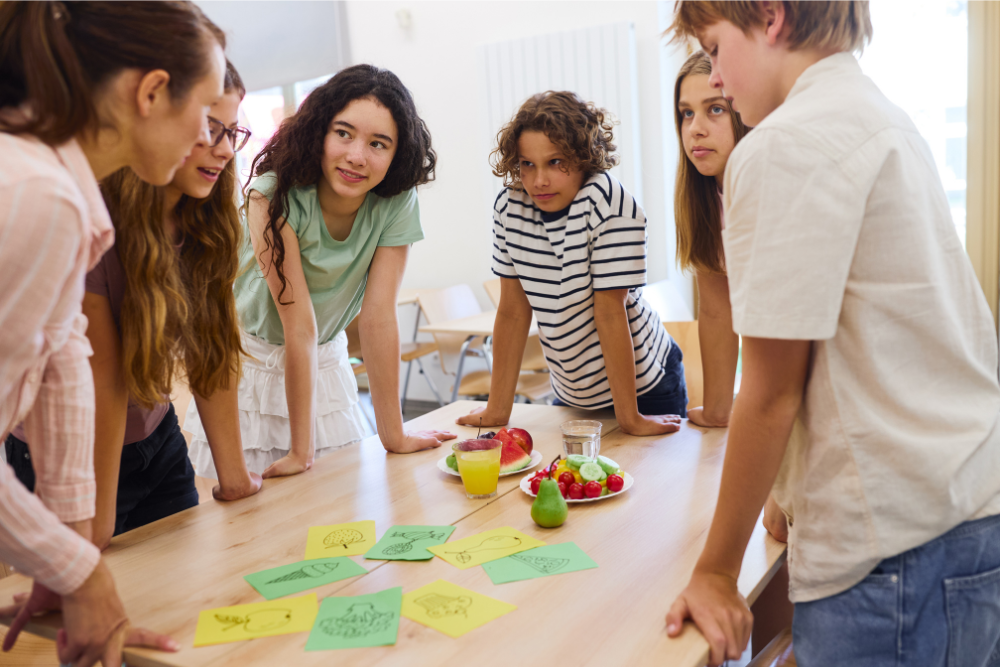
Another step is allowing others to be who they are without judging.
We all make mistakes, as so it is best that we remain friendly with error.
Learning to listen for understanding (and not judging, analyzing, or criticizing) is an important skill to learn and to teach.
Learning emotional vocabulary helps us understand that our emotions are normal and can be accepted. Once we have a word for an emotion, it seems easier to manage.
With a calm, non-judgmental adult presence, children and adults learn to self-regulate, thus calming themselves and others, contributing to the trust and safety of the group.
An important piece is to find ways for others to contribute to the well-being of the group.
When we feel like we belong to a group, we feel safe. We are also more likely to control our emotions to avoid hurting others.
Practicing active listening allows those with different views to feel that they matter to the group.
Delegating vital jobs, not just busy work, promotes a sense of contribution within our organizations.
In our families, teaching our children how to do important chores allows our children to feel like they belong.
Learning practical life skills, using peer-to-peer teaching, and offering mixed age collaborations at school allow students to become key players in their group’s success.
In our larger community, we invite participation in events and rituals. Here, I’m reminded of the annual Halloween Parade in my grandchildren’s neighborhood with seemingly every child and parent in costume. This event always feels safe, welcoming and inclusive.

Communication skills matter.
If you are human, there are going to be problems and conflict.
Everywhere—at home, at school, at work—there is a need to teach and use effective communication skills. Life is so much better when the people around us know how to apologize, resolve conflict and figure out how to make things right when everything has gone south in a handbasket.
Beauty communicates safety.
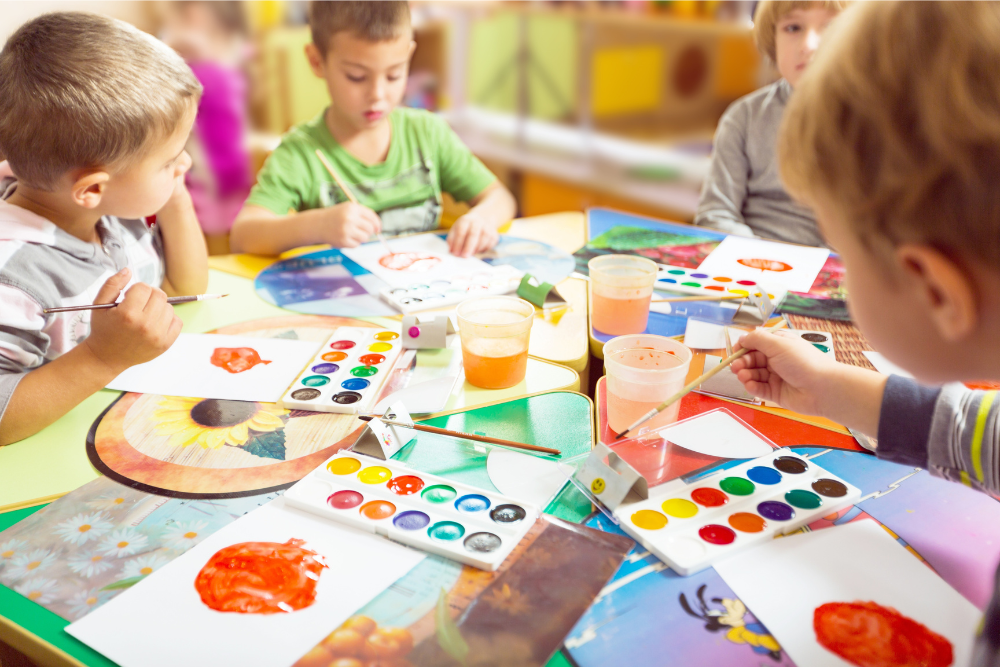
A beautiful, clean, orderly environment promotes calm and safety. Natural light, calm colors, and spaces scaled to the people using are some of the key factors in creating beauty and safety. A beautiful well-planned environment offers easy access to supplies, water, snacks and bathroom facilities.
A prepared environment is sometimes referred to as is the “second teacher”. Look around your space and ask if the people there can participate in all activities with grace and dignity.
Shared experiences create shared values.
Gatherings that help participants understand the “why” of their group, along with developing the sense of being something larger than oneself.
Discussing strengths, weaknesses, opportunities and threats within our groups strengthen the bonds of trust and safety.
It only takes a careless word or act for those bonds of trust and safety to be damaged or broken, so offering regular shared experiences becomes key to creating a place for learning and living.
“Is this contributing to the trust and safety of our group?” is one question to continually ask ourselves and others.
SUMMARY
Safety is created by designing an environment that communicates that we are firmly connected.
Start today by:
· Creating predictability in your space.
· Making your space a non-judgmental zone.
· Allowing and encouraging meaningful contributions from all members
· Teaching communication skills
· Creating beautiful, clean and orderly spaces
· Sharing experiences regularly
Remember: Safety comes first as we build places to learn and live our best lives.
Join me for a complimentary mini-workshop…
