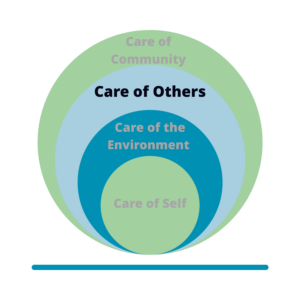
As we consider the different areas of practical life exercises, we might see that care of others follows a natural expansion from the child’s activities in care for the self and care of the environment.
Before we can truly take care of others, we need to know how to take care of ourselves, and at the minimum our immediate environment.
As children, we naturally take our helping skills, when we possess them, and extend those skills into being of service to other people.
Once we know how to pour ourselves a glass of water, it seems a simple task of getting a glass of water for another person.
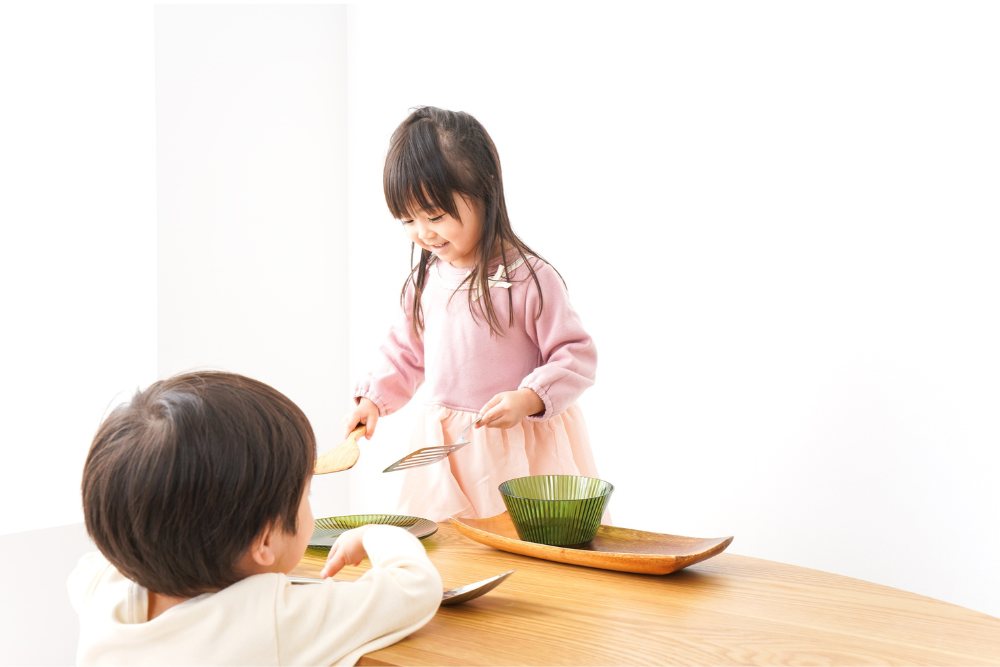
And so it goes for all the independent tasks that children can do for themselves. From serving food (and a favorite activity in my class was serving pieces of cut up green beans on a silver platter, asking, “Would you care for a green bean?”), to helping a younger child zip their coat or put on their shoes, children learn that their personal abilities contribute to the wellbeing of others.
Socials Skills: Lessons in grace and courtesy
One of the areas that we do offer direct lessons to children is for grace and courtesy. As adults, of course, we are the models of the words and actions used to smooth the rough edges of social life. In the classroom and at home, we can use small vignettes, or lessons, to demonstrate to children many of the details of social interaction. Some of these include
- Learning how to greet another person
- Waiting one’s turn
- Saying, please, thank you, and you’re welcome.
- Inviting a friend to play
- Offering to help
- Learning to resolve conflict and to problem solve
- Noticing when someone is left out and including them
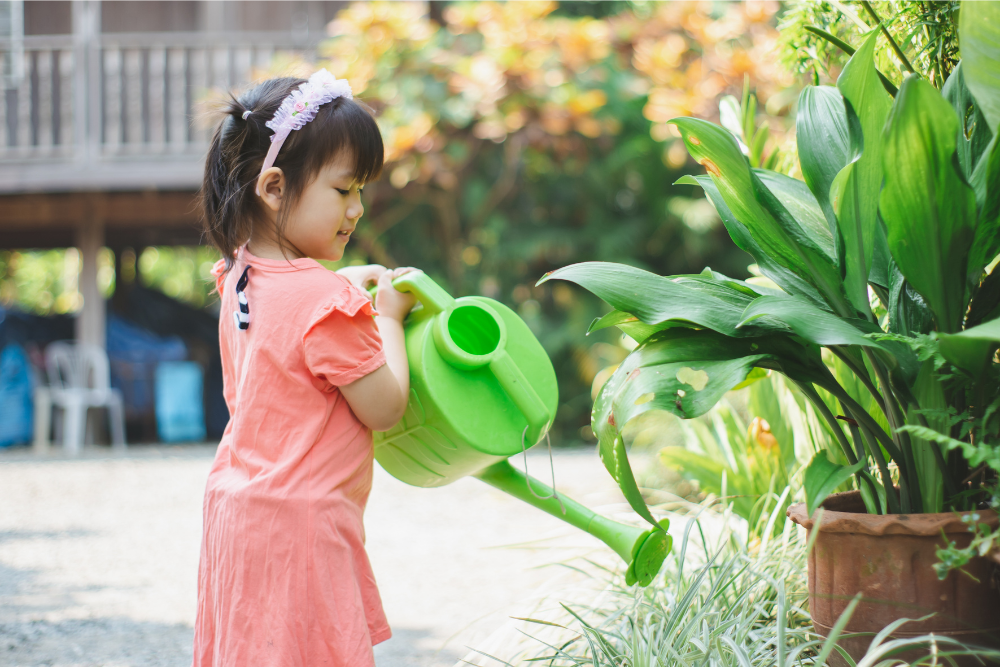
Care of the environment also helps others
Also, children’s work in caring for the environment also extends into the care of others. The children realize that putting their activity (work) away in good order contributes to the well-being of everyone in their community. Some of these care of the environment activities include:
- Watering plants
- Caring for classroom pets
- Arranging flowers (a favorite activity in a Montessori classroom)
- Washing a table or chair
- Cleaning window.
- Reporting and repairing damaged items
Leadership Skills Emerge
As a child approaches their third year as a five-year-old in a Montessori classroom we observe emerging leadership skills that we may not see again until a child is in junior high or older. This five-year-old leader confidently guides classroom routines, announcing that it’s time to set up for lunch or other activities. Usually during the last month of the school year, I would watch as the departing older children show the next year’s cohort of leaders how to take over.
We also see the older child patiently teach younger child a variety of skills; how to tie their shoes and how to use various materials along with the steps of an activity. The older child enjoys reading to others and helping them practice the basics of writing and reading with the moveable alphabet and other reading materials.
Empathy and Compassion
As children take on leadership roles in the classroom, we also see a budding awareness of the emotional needs of others. The children notice when others are sad or upset. They will sit with others to help them calm down. On the other hand, they will also leave others alone when they need that. Celebrating others’ successes, such as writing to 100, is also seen. The children become inclusive of others, realizing when someone feels left out and inviting them to join in activities. They also become more aware of problem-solving tools and use class meetings to make others aware of problems and how they might be remedied. An example of a problem to be discussed: painting smocks being put away dirty.
Extension of skills into larger community
As the child ages up into the second plane of development (ages 6 to 12), the skills used to care for others continue to grow and expand into the larger community of home, church, and other places such as libraries, parks, and other organizations. The older child enjoys making gifts and cards for family members along with caring for the outdoors and animals. The older child becomes interested in how other cultures live and carry out their daily routines of life.
With the older child, beginning around age six, we will hear the lament, “But that’s not fair!” At that point the child begins to discuss values and principles such as fairness, respect, responsibility and peace.
Beginning with care of the self, and the natural extension into care of the environment and care of others, we see the development of empathy, self-worth, social awareness, inner discipline as well as a sense of purpose.
Caring for yourself, and the people, objects and nature in your environment form the underpinnings of a life well-lived.
Take a complimentary mini-workshop…
