
Self-Construction: The Foundation of Learning
As we explore ideas for creating optimal learning environments, one central concept emerges: from birth, each of us is engaged in the process of self-construction— building ourselves through our experiences and interactions with the world.
We are born into an environment of people, ideas, tools, objects, and the natural world. As children, we have little or no influence over how that environment is created. As we grow older—and especially as adults—we become responsible for shaping our own environments for learning and growth. Often, we are also responsible for preparing environments where others can learn.
Because of this, the design of a learning environment matters deeply. When thoughtfully prepared, it can support learning, independence, and the natural joy of discovery.
It is this “joyful work” that we strive to support through the prepared environment.
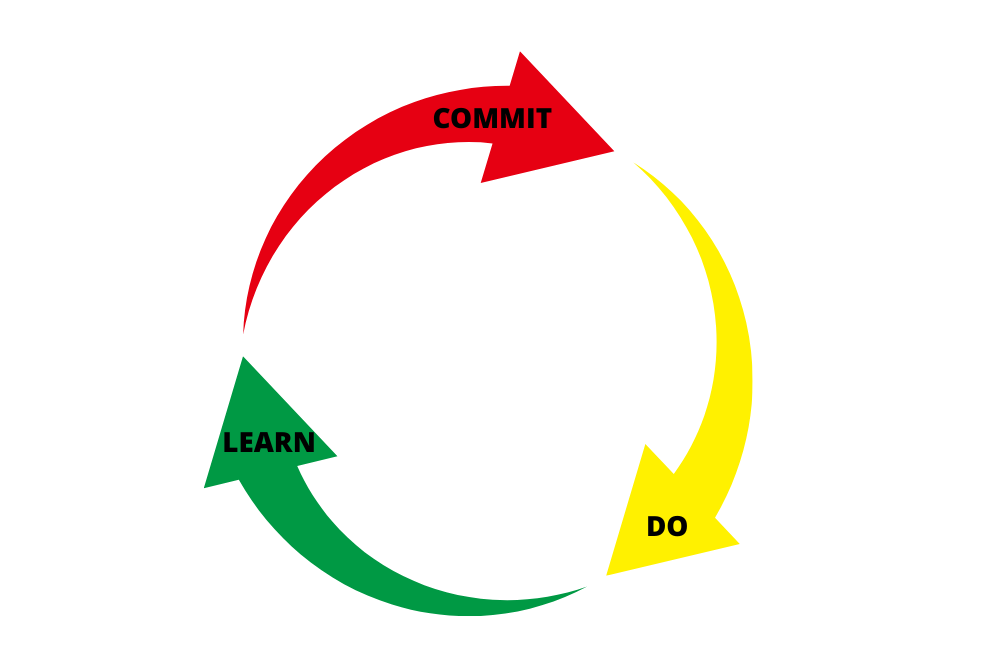
Stephen Covey referred to this process as the “success cycle.” We choose an activity (commit), engage in it (do) , experience internal satisfaction from the work (learn), and then select the next task. In Montessori education, this is known as the work cycle.
Freedom of Movement: The First Step Toward Autonomy
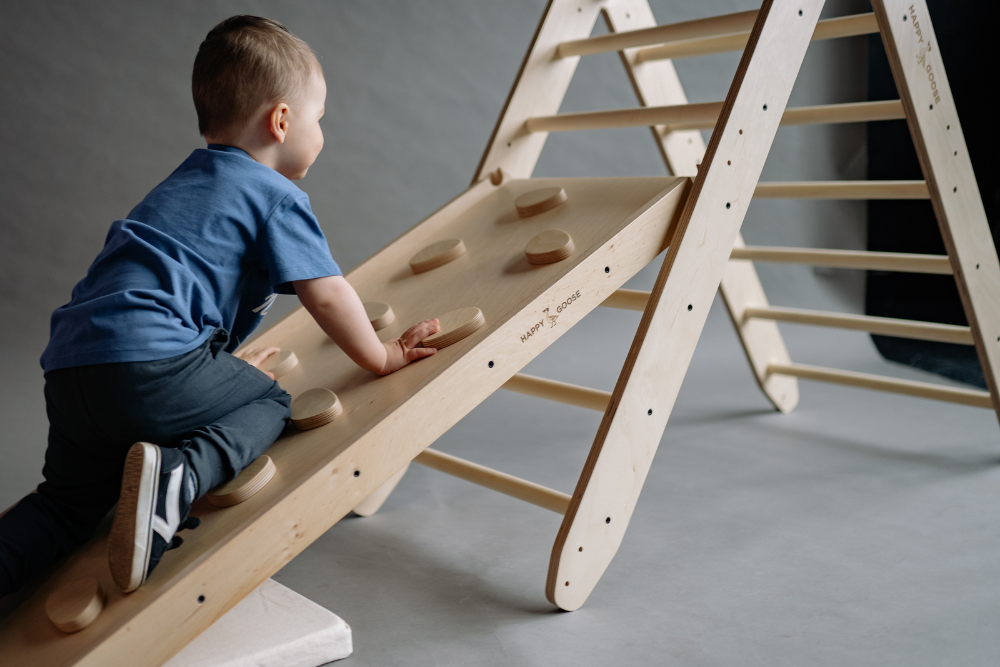
After establishing a safe environment, the first step in creating a learning space is allowing freedom of movement.
The environment is designed to support movement, with clearly defined areas for different types of activity.
This represents a shift in thinking—from a seat-work mentality to a mindset of learning through movement.
Free Choice and the Power of Initiative
Hand in hand with freedom of movement is another essential principle: free choice of activity. To aid the self-construction of the individual, we offer each person this freedom of movement and of choice that leads to initiative and self-empowerment.
Clarifying Purpose of Place
When my granddaughter was a young two-year-old she tried valiantly to explain something to me. I pride myself in being able to speak “Two,” but I was getting nowhere. A key word was unintelligible, and I apologized for not understanding.
“Grandma, you know that place you go to learn?” she said.
“Ah, school!” I figured it out! But more importantly I knew that she knew her purpose at school.
“School is a place to learn” may seem matter of fact but having asked hundreds of children why they were at school, only a few had a clear view that they were there to learn.
The idea must be clear and in the air: This is a place to learn to be independent by being free to move and free to choose your work.
Structured Choice: Freedom Within Limits
Too many choices and we are overwhelmed, while on the other hand, limiting choices may remove a desire to do an activity at all.
When I was in my early twenties a coworker asked if I could go shopping with her for professional outfits. She had been in Catholic schools all her life and had worn a uniform. She told me that when she did go out to buy work clothes, she ended up buying nothing or making regrettable choices.
“Shopping is too much!” she told me. “There are too many decisions, and I seem to make all the wrong ones.”
In my friend’s case, clothing choices overwhelmed her. Too few options for years (plaid jumper or plaid skirt?) created a sense that choosing was difficult.
With structured choice we limit the number of choices so decision making seems manageable.
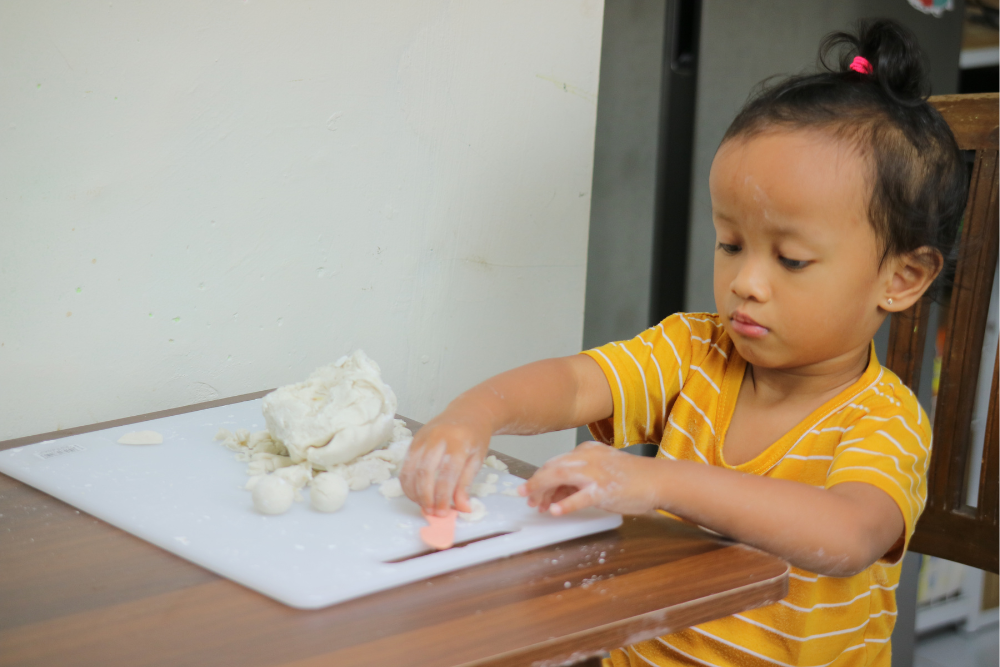
In our classrooms we offer choice with “freedom within limits” offering a variety of activities with ground rules for use:
- Choose an activity you’ve been presented.
- Work on a rug or table.
- Put your activity away when you are finished, ready for the next person.
- Ask permission to touch anybody else’s work.
Activities are arranged sequentially on shelves and are limited, usually, to only one of each activity.
This allows for clear structure and transparent rules, allowing students to make decisions more easily.
The Classroom as Second Teacher
Environments that support free choice and independent work have clearly organized materials, and all materials can be accessed without adult assistance.
The learning environment becomes a second teacher for the students as they explore their limits of freedom.
Also, within this space there are multiple levels of challenge that span several years of study.
Instructions from the teacher are short demonstrations of how to do the activity. Other experienced students may also help guide the activity if asked by the student.
The attitude in the classroom is one that is friendly with error, as it is understood that the frontier of learning is making mistakes.
With the buzz of independent activity in a Montessori classroom, entering parents often look around and ask, “Where is the teacher?”
The teacher is there, quietly giving instructions, with the second teacher, the space itself, being prepared for movement and autonomy.
Protecting Time for Deep Work
Interruptions are few or none in a protected three-hour work period.
Extended work periods allow students to make meaningful decisions about:
- Time – how long they will spend on a task
- Task – what work they will pursue
- Team – whether they will work alone or with others
- Technique – how they will approach the work
This sustained time allows learners to revise, rethink, and deepen their work.
If obstacles are encountered during the project, this work period allows for rethinking and adjusting strategies, allowing students to create something personally meaningful.
Here I think of students writing stories or plays instead of doing a worksheet. Additionally, they can take their plays and stories and make them even longer and stronger the next day.
Learning Through Challenge: Finding the “Goldilocks Zone”
To offer autonomy and free choice in a learning environment, decision making skills need to be explicitly taught and learned.
As with my friend having difficulty buying work clothes, decision making skills require practice.
Students need to be taught how to choose work that is in the “Goldilocks spot”, not too hard, not too easy…just the right challenge.
They need to be able to see the next steps: Write a story, how are you going to edit it? Format it? Illustrate it? Present it?
Another factor in the decision-making process is recognizing when you need to seek additional help: Editing is hard for you? Who do you know to ask for help?
The development of persistence–following through on your decision– is strengthened by holding a student’s work to a high standard. For example, the story isn’t finished until it is rewritten with correct spelling and grammar, presented neatly, illustrated, and then shared with the group.
A free choice environment supports the project decisions students make, mistakes and all.

Responsibility: The Partner of Freedom
Freedom of choice and movement require the development of responsibility. Without responsibility, freedom becomes randomness.
Responsible tasks include:
- You’re free to choose your activity, so long as you leave everything in good order.
- When you start a project, you should finish it.
- You also need to respect others’ need for choice and concentration.
- Movement and noise need to be appropriate for the space and time.
The environment is not about meeting the needs of only one person. It involves a community, working together so all can share in the benefits of a prepared environment rooted in personal and collective freedoms.
Reflection: Helping Students See Themselves as Learners
To strengthen autonomy, students need time and tools for reflection.
We ask students to account for their time in terms of how they used it for projects.
Simple questions such as the following can help students see themselves as learners on a path of growth:
- What did you choose to work on today?
- What challenged you?
- What are you proud of?
- What will you try next?
Daily work journals, along with weekly one-on-one meetings with their teachers, help students reflect, analyze and plan.
The Teacher’s Role: Observer, Guide, and Designer
The teacher’s role shifts from “the sage on the stage” to “the guide on the side.”
Rather than directing every behavior or outcome, the teacher becomes an observer, guide, and designer of the learning environment.
- Observer: The teacher watches for student interests, struggles, and readiness for new challenges.
- Guide: Lessons are offered when needed or when requested by students.
- Designer: The teacher continually adjusts the environment to support engagement and learning.
A teacher asked a classroom consultant why her students ran in the classroom, even after numerous lessons and discussions of why they shouldn’t.
With observation they saw that the shelving unit placement created a long hallway that invited running. Moving a few pieces of furniture and the inside racetrack was gone.
The environment itself encouraged the behavior.
The teacher as observer, guide, and designer. A big role shift.
The Results of an Autonomy-Centered Classroom
When learning environments support authentic autonomy, remarkable things begin to happen.
Students develop:
- intrinsic motivation
- perseverance
- awareness of themselves as learners
- responsibility for their work, their peers, and their community
- deeper understanding of academic content
Students come to see themselves not as individuals completing assigned seatwork, but as active participants in their own learning.
With autonomy, they understand—like my granddaughter—that school is the place they go to learn and to do work they love.
Join me for a complimentary mini-workshop
