
There is an enduring quote about learning:
“Tell me and I forget, teach me and I may remember, involve me and I learn”.
Attributed to Benjamin Franklin and to Chinese Confucian philosopher Xun Kuang, the idea that active engagement is key to powerful learning has survived for over 2000 years.
When I was in junior high school I may have spent more time walking with a hall pass than I did in class. I was bored, as I finished my assignments quickly. The hall pass allowed me access to most of the school (I avoided the principal’s office) and usually visited the school librarian, along with our janitor. Mrs. Payne, our librarian, showed me how to reshelve books and Alvin, our janitor, was always ready for a quick chess game in his basement office. Learning to be fast with the Dewey Decimal System as well as the chess board was fun because I was physically and mentally engaged. Plus, the hall pass activities were my choice.
Neuroscience now tells us that neurons that “fire together, wire together”. The brain encodes learning more strongly when action and thought occur together.
When we are actively engaged in our freely chosen activities, learning, through memory, becomes stronger and longer. Today we know that movement supports attention, memory, emotional regulation, and executive function.
“Involve me and I learn”, in my mind, begins with freedom of movement which leads to choosing an interesting activity.
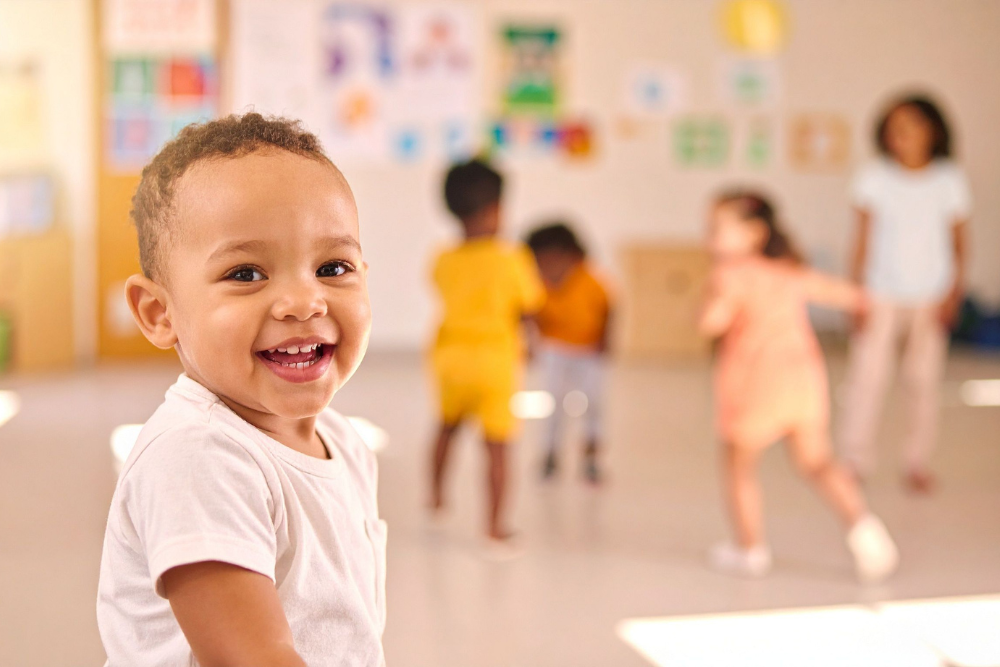
How do we create a place to learn where freedom of movement is encouraged in order to create cogent learning?
First, I think we need to change our thinking about how learning occurs.
Seat-time is not where our best learning occurs. Intentional meaningful activity—like my shelving books in the library or playing chess in the basement supply room—starts with freedom of movement.
To allow that freedom of movement requires a prepared environment of people, tools and objects, ideas, as well as the natural world.
This movement-friendly learning environment includes interesting activities, curious workmates, along with observant adults, as well as access to the outdoors.
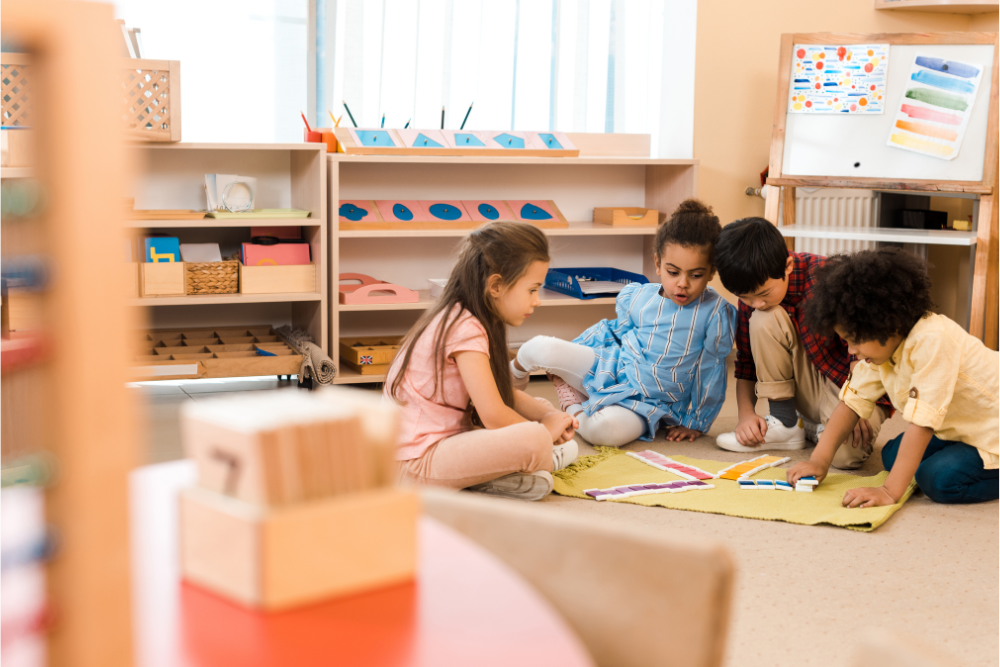
Short individual or small group presentations that promote active exploration replace seatwork. Students manipulate materials to visualize concepts, examine plans for building, and investigate and test hypotheses.
Students’ self-chosen tasks require gathering information, collaboration and movement throughout their learning environments.
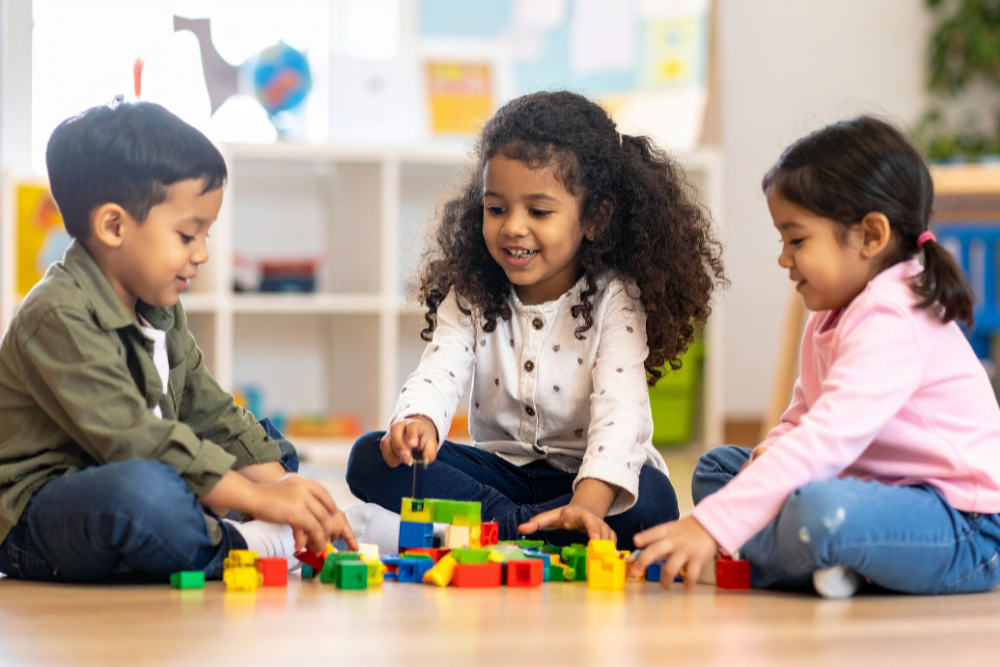
The prepared environment is also designed for freedom of movement.
Workspaces are clearly defined; here’s where you can paint, layout materials on the floor, read, run experiments, cook, eat, and more.
Students have access to all the materials for activities without having to ask adult permission.
The room configuration is flexible with easy-to-move furniture, while also offering pathways that invite movement rather than confinement.
Allowing free choice in terms of activity, movement, materials and learning groups becomes a normal concept for teaching and learning.
When we can embrace this concept of movement and free choice, allowing students to choose where and how they work, as well as with whom they work, we observe that movement becomes a method of self-regulation, not the restlessness that I experienced in junior high school.
We see that students move not because they are bored or unfocused, but because they are pursuing self-selected objectives.
Uninterrupted blocks of time for learning with movement create a predictable cycle of activity that we can observe and document.
Interestingly, movement becomes part of a natural learning cycle, not a break from learning.
In Montessori classrooms we strive to offer an uninterrupted three-hour work period , allowing students to manipulate, test and build. When we can give this gift of time to students, we see that levels of concentration and independent activity become increasingly stronger.
This three-hour period contrasts with the schedule posted in a preschool class of four-year olds I visited. Every fifteen minutes the teacher transitioned the children to another activity, as their teacher told me, to avoid them becoming bored and rowdy.
Freedom of movement allows observable phenomena–focus and self-regulation.
In movement-rich environments, the teacher’s role changes from controller to designer of the environment.
With this shift in thinking, the teacher’s job becomes one of preparing conditions for learning rather than directing every minute of the day.
By designing the learning environment, the teacher becomes free to observe patterns of engagement, in order to understand what is working and not working for individual students.
With that information in hand, the teacher offers precise lessons when a student or group is ready.
Instead of enforcing immobility and lesson compliance, the teacher becomes the protector of concentration and independent learning.
This shift in approach can appear radical to those who have not taught or gone to school this way—but the classroom designed with freedom of movement actually increases order, because students’ energy is aligned with purpose.
Teachers in movement-oriented classrooms look for:
- Sustained attention
- Meaningful collaboration
- Initiative
- Evidence of thinking
- Care of materials and environment
Their focus changes from “Are my students sitting still and paying attention?” to “Are they deeply involved?”
Allowing students freedom of movement, within limits of responsibility and safety, schools encourage and develop:
- Ownership of learning
- Stronger neural integration for brain development
- Social responsibility
- Intrinsic motivation
- Real-world problem-solving capacity
SUMMARY
Allowing freedom of movement in classrooms is not about abandoning structure.
Instead, it is about designing environments, structuring places to learn and live, where the work itself defines the structure of the environment.
Understanding how the brain works best for learning, we see that movement is integral to the learning process.
With this knowledge, the role of the teacher changes from controlling students to designing the learning environment; from grading behavior to observing for engagement that leads to concentration and independence; from looking for correct answers to watching students uncover problems and test possible solutions.
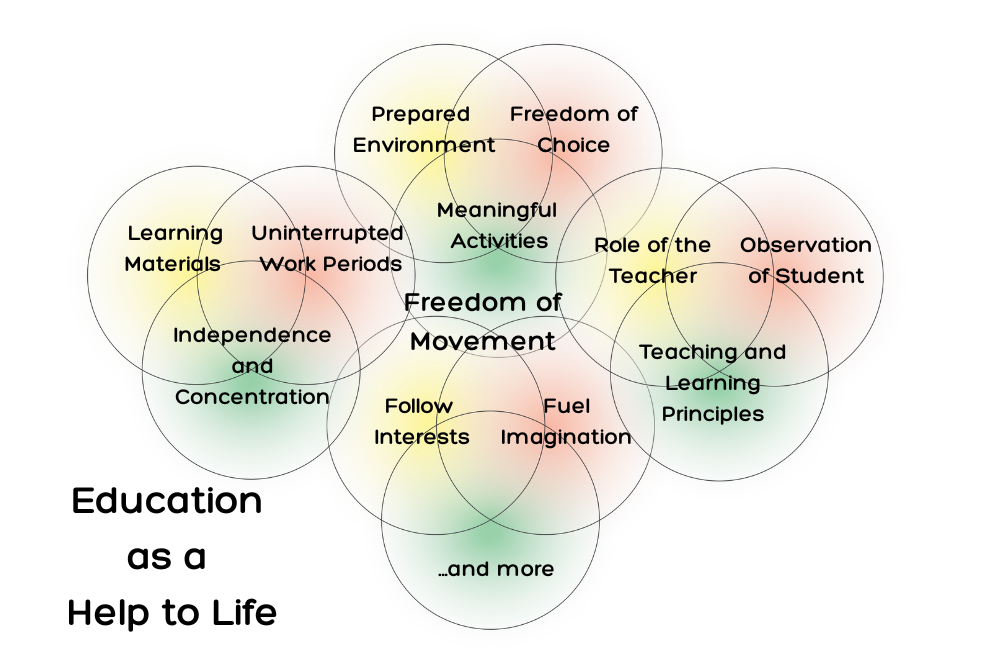
As we look at how to allow freedom of movement in our classrooms, an intricate pattern begins to emerge for learning that includes:
- The prepared environment
- Freedom of choice
- Meaningful activities
- Uninterrupted work periods
- Development of independence and concentration
- Learning materials
- Following interests
- Lessons that energize the imagination
- The role of the teacher
- Teaching and learning principles
- Observation of the student at work
- Group dynamics
- Development of the whole person
- And more.
As our students become more and more connected to their screens, the fundamental concept of freedom of movement for optimal learning needs to be better understood and implemented by parents and educators.
Because freedom of movement is the first step forward for education as a help to life.
“A mind is a terrible thing to waste.”
Join me for a complimentary mini-workshop…
